The difference
Lippan art vs Madhubani art
These two get confused often, usually because both are Indian folk traditions that end up on a wall. They come from different states, use different techniques and look nothing alike up close. I make both, so here is the honest comparison rather than a sales pitch for one.
Made to order in Sector 67, Gurugram · from ₹700 · shipped across India & worldwide
The short answer
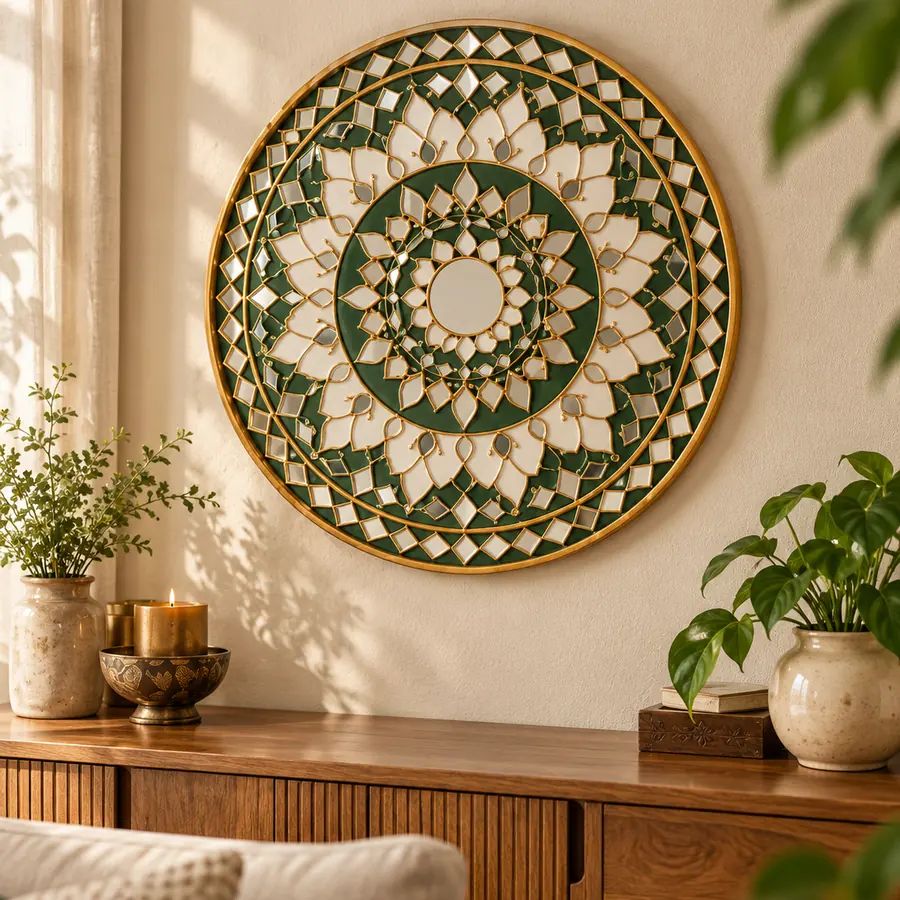
Lippan is a relief craft: raised clay lines with mirrors set into them. You feel it with your hand. It comes from Kutch in Gujarat and it is built, not drawn.
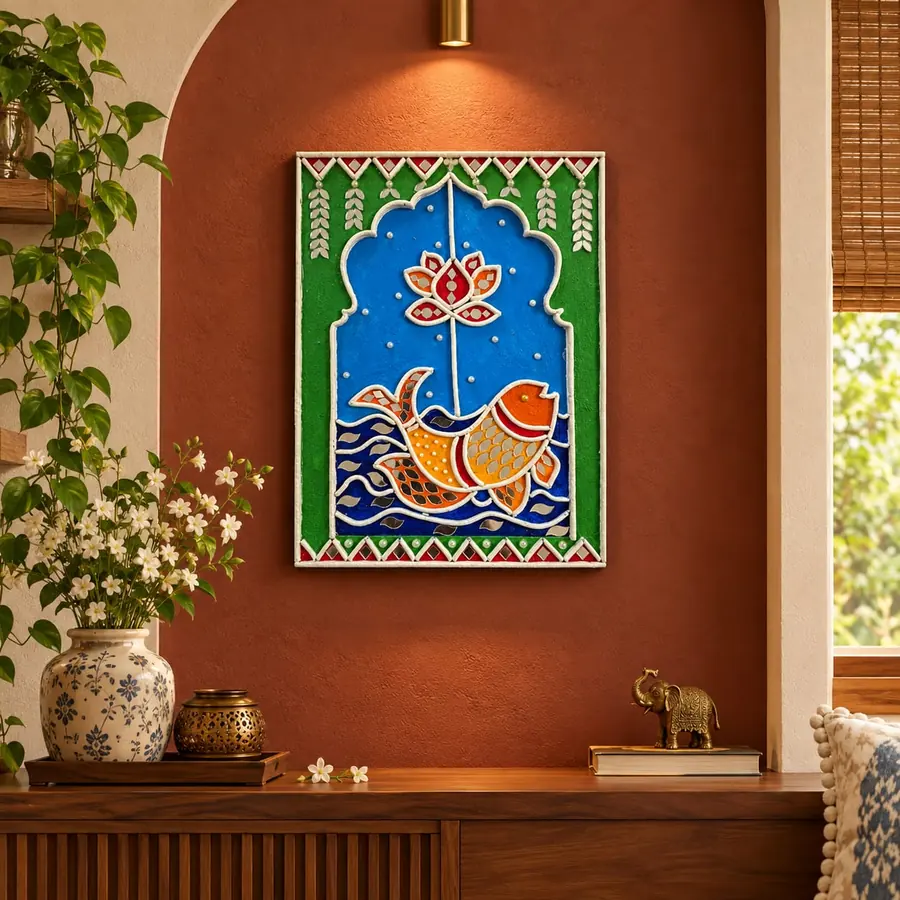
Madhubani is a painting tradition: fine line work filled with colour and symbol, from the Mithila region of Bihar. Classically it is flat on paper, cloth or a plastered wall.
If you want texture and light, Lippan. If you want story and symbol, Madhubani.
Where each comes from
Lippan kaam was applied to the inside walls of bhungas, the round mud houses of Kutch. Clay was pressed into raised patterns and mirrors set into the design, so that a single oil lamp lit the whole room after dark. It was practical before it was decorative.
Madhubani was painted by women on the walls and floors of homes in Mithila for weddings and festivals, using natural pigments and a twig or fine brush. It was a record of ritual, not ornament.
How each is made
A Lippan piece is drawn, then built: each raised line laid by hand, mirrors set while the clay is still workable, and every layer left to dry fully before the next. The drying is what sets the timeline, and it cannot be hurried without cracking.
A Madhubani piece is drawn and filled. The surface is traditionally covered completely, because empty space is left unused in the tradition. What I make keeps the drawing and the symbolism but raises the outlines in relief with mirror detailing, so it reads from across a room rather than only up close.
What each looks like on a wall
Lippan is monochrome or restrained in colour — traditionally white clay on a dark ground — and it changes through the day as the mirrors catch different light. It suits a wall that gets some light and a room that does not need more colour.
Madhubani is strong colour: reds, greens, blues and yellows are part of the tradition, not a choice. It suits a plainer room, and it gives you a subject — a fish, a lotus, a peacock — rather than a pattern.
The motifs mean different things
Lippan is geometric and symmetrical. The patterns are mandalas, peacock forms and repeating borders, and the meaning sits in the symmetry rather than in any single figure.
Madhubani is a language of symbols. Fish stand for fertility and good fortune, the lotus for purity, the kohbar for the marriage chamber. If a piece is a gift for a particular occasion, the motif is worth choosing on purpose.
Which should you choose
For a living room wall with decent light, or a pooja room where the association is traditional, Lippan tends to win.
For a wedding or housewarming gift where the meaning matters, or a plain wall that needs a subject, Madhubani tends to win.
Both are made to order here in the same studio, in your size and your colours. If you are undecided, send me a photo of the wall — the room usually answers the question faster than a list does.
Questions before ordering
Is Lippan art the same as Madhubani?
Which one lasts longer?
Which is more expensive?
Can I have both in one room?
Do you make these to order?
More from this collection