Pichwai art
Pichwai art, handmade to order
Pichwai painting comes from Nathdwara in Rajasthan, where large cloth panels were hung behind the idol of Shrinathji in the temple — pichh means behind, wai means hanging. I make Pichwai-inspired panels by hand, with mirror work and gold detailing, in sizes that suit a home rather than a shrine hall.
Made to order in Sector 67, Gurugram · shipped across India & worldwide
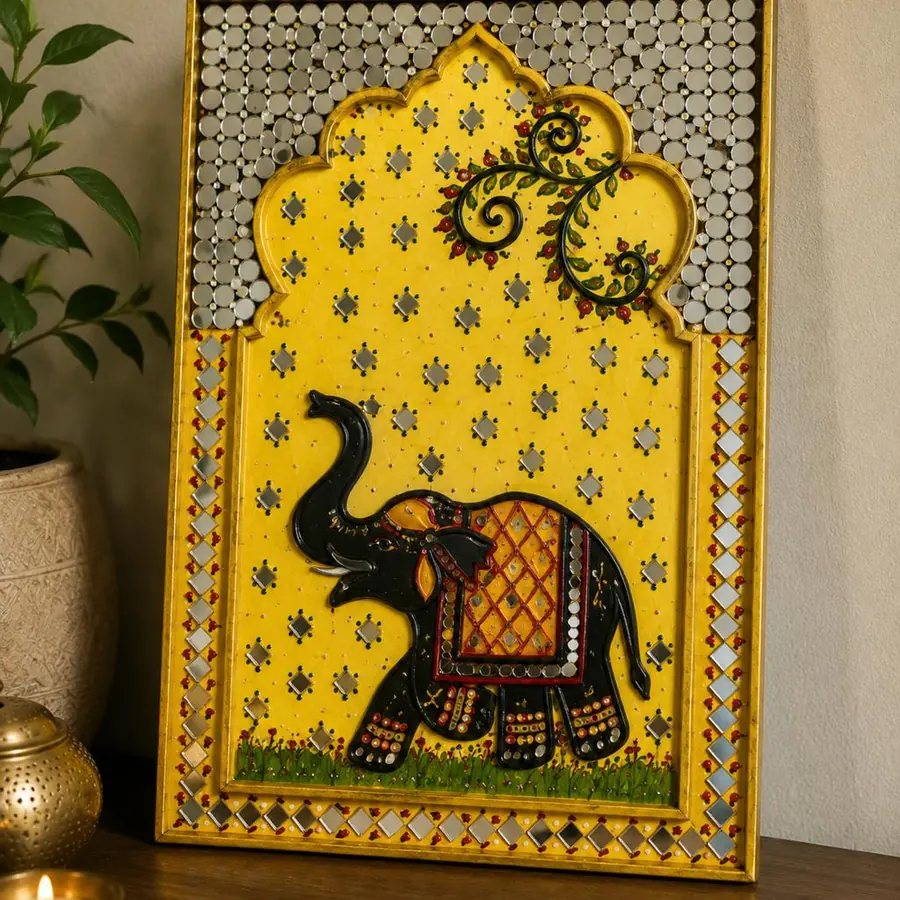
What Pichwai depicts
Traditional Pichwai panels change with the festival calendar. Each one shows scenes from the life of Krishna as Shrinathji — the lotus pond, the cows of Vrindavan, Annakut with its mountain of food offerings, Sharad Purnima under a full moon.
The recurring elements are lotuses, cows, peacocks and decorated elephants, usually arranged with strict symmetry around a central figure or arch. It is a devotional art form first, which is why the compositions are so ordered.
How mine are made
The classical work is painted on cloth with natural pigments and real gold. What I make is a hand-painted panel in an arched jharokha form, with mirror work set into the surface and gold detailing on the motifs.
The arched top is deliberate — it echoes the temple niche the original panels hung in, and it frames the subject the way the tradition intends.
Where it works in a home
Pooja rooms and prayer corners, which is the closest use to its origin. Entrance walls, where the symmetry and the gold do their work. Above a console or sideboard, where the panel has something to sit against.
Because the compositions are symmetrical, a Pichwai panel usually wants to be the single focal point of a wall rather than one of a cluster.